Or until the flight crew pancakes your airliner into the Atlantic because nobody recognizes we're in a deep stall <ng>
IMO, that one was not understanding a full stall in a swept wing aircraft. They do not stall like straight wings do. No nose drop.
We did a fall aft stick stall in the T-38. Nose stayed slightly above the horizon, wings rattled. Otherwise, quite unimpressive. Until you saw the VVI was pegged, and the T-38 VVI indicated up to 6000 FPM up or down.
I did mine over thin layer, and the ground rush was eye opening.
Good to see that many avsiggers have sailplane experience in their past.
Hard to pinpoint exactly any one thing about that background that forever makes you a better pilot, but better pilot you are.
Regards,
Tom Charlton
Understanding that the pedals on the floor are not only for steering on the ground.
Gliders and taildraggers teach this. Or actually DEMAND it.
I got as far as soloing in a glider. Not much lift in Faribault, MN in the late fall. Definitely improved stick and rudder and energy management skills.
Chuckle, readin' all this made me recall learning to fly in an Aeronca Champ on skis (no brakes). Made me REALLY aware of something one fine day. An ice covered ramp and headed for a hanagr is NOT a good place!
How about stick-and-rudder skills and a solid feel for energy management? I got mine in wood-and-fabric taildraggers without flaps. Aerobatics in a Stearman were a big part of it for me. Cubs on wheels and skis did a lot, too.
Hi Ray,
Yup, all that stuff sort’a cumulatively adds up and makes a positive difference.
Lotsa "systems operators" with pilot certificates these automated, glass cockpit days.
I spoz that’s largely what’s needed in today’s environment . . . until a bunch of geese clog up both of your motors. Or until the flight crew pancakes your airliner into the Atlantic because nobody recognizes we're in a deep stall <ng>
Suspect there’ll be additional such events with higher demand for pilots and more pilot-mill / ab-initio training.
Hoping my Southwest crew to Dilute and return are a bunch of sailplane, tailwheel love’n aerobatic aficionado geezers.<g>
Hard to pinpoint exactly any one thing about that background that forever makes you a better pilot, but better pilot you are.
How about stick-and-rudder skills and a solid feel for energy management? I got mine in wood-and-fabric taildraggers without flaps. Aerobatics in a Stearman were a big part of it for me. Cubs on wheels and skis did a lot, too.
Lotsa "systems operators" with pilot certificates these automated, glass cockpit days.
Good to see that many avsiggers have sailplane experience in their past.
Hard to pinpoint exactly any one thing about that background that forever makes you a better pilot, but better pilot you are.
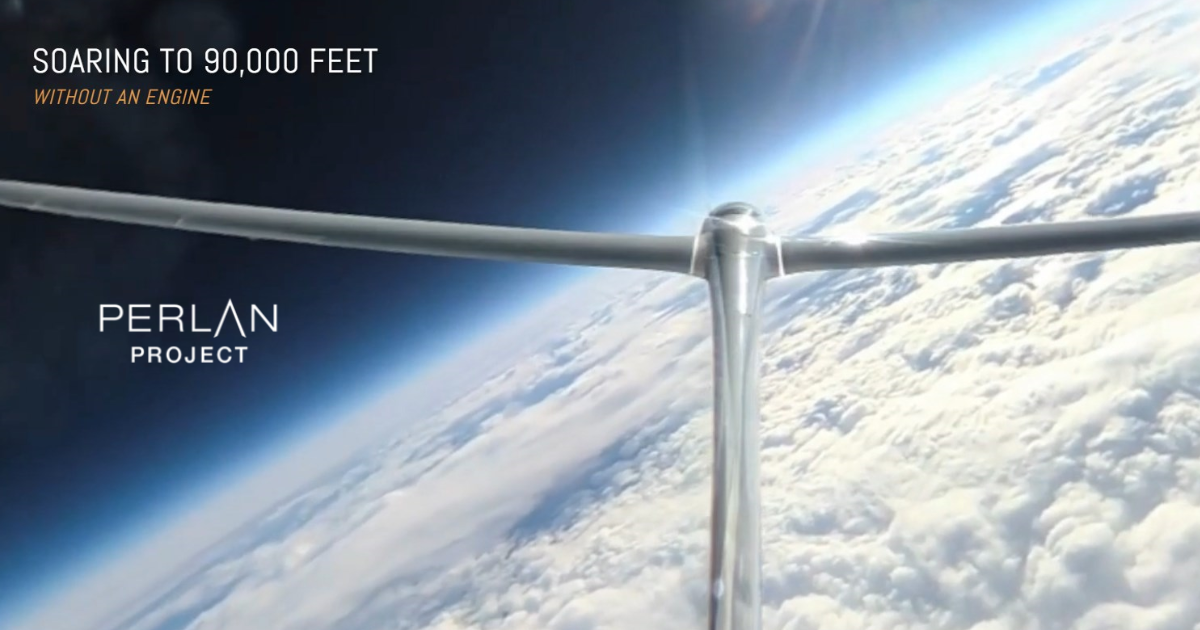
* The cabin will be pressurized to 8.5 psi (14,500 feet). Pure oxygen rebreather system.
Ya’but Terry, Won’t be pressurized when high speed aileron flutter rips the wing off. At altitude they’re flying a high % of mach.
* At 90,000 ft air density is less than 2% of what it is at sea level.
* TAS at 90,000 is 350 knots.
* M1 is about 585 kt. So flying at about mach 0.6.
* Wing span of 84 feet.
* I'm sure they've done the engineering but . . . mighty fast for a long, experimental, slender wing.
Schweizer. German fiberglass squeezed them out of the glider market a while back and they're a helicopter company now, though there are a lot of their products still flying. Their 2-32 had a wide back seat that could hold two people, and most of that fleet got bought up by a tourist-ride chain.
And how many people got their primary training in a 2-33, or the predecessor, the 2-22, also known as the Brick. ]
And the 1-26 is still a well patronized one design class.
* The cabin will be pressurized to 8.5 psi (14,500 feet). Pure oxygen rebreather system.
Ya’but Terry, Won’t be pressurized when high speed aileron flutter rips the wing off. At altitude they’re flying a high % of mach.
* At 90,000 ft air density is less than 2% of what it is at sea level.
* TAS at 90,000 is 350 knots.
* M1 is about 585 kt. So flying at about mach 0.6.
* Wing span of 84 feet.
* I'm sure they've done the engineering but . . . mighty fast for a long, experimental, slender wing.
Schweizer. German fiberglass squeezed them out of the glider market a while back and they're a helicopter company now, though there are a lot of their products still flying. Their 2-32 had a wide back seat that could hold two people, and most of that fleet got bought up by a tourist-ride chain.
Wow, just readin' here and am jsut amazed, we had a Schwiezer (spellling?) 1-23 at Lubbock/Hobbs and thought I was lucky to be able to fly it a few times.
Hi Ralph,
I’ve flown aerial mapping flights at 25K in an unpressurized Cessna 411 long ago. Even with a diluter demand system scared the bejesus out’a me<g>. I guy can catch a case of stupid then dead real quick up there<ng>.
Regards,
Tom Charlton
I read about the previous record and this one. The glider is actually pressurized.
And they did a tow up to 40K. So, while very high, not so much altitude gain.


Leave a comment: